The second launch day of the year started out with overcast skies with an occasional drizzle. Fortunately, the wind was weak and coming from a N/ NE direction.
This time we were particularly eager to set up our launch tower without any deviations in azimuth (55 degrees) and elevation (83 degrees). No corrections were needed upon inspection by the commanding officer. A good thing, as the launch window was approaching quickly.
The intimidator rocket was again quickly assembled by JvdB and mounted in the launch rail well in time for the upcoming launch window. The GPS tracking electronics was briefly activated to allow for a GPS lock, enabling a warm start of the system upon activation for launch. The system obtained a lock within just a few seconds which was a bit of a relief. The system did not fly before and testing at home is always different than in an actual launch situation. Luckily the ASK factor did not play tricks on us this time and everything appeared nominal.
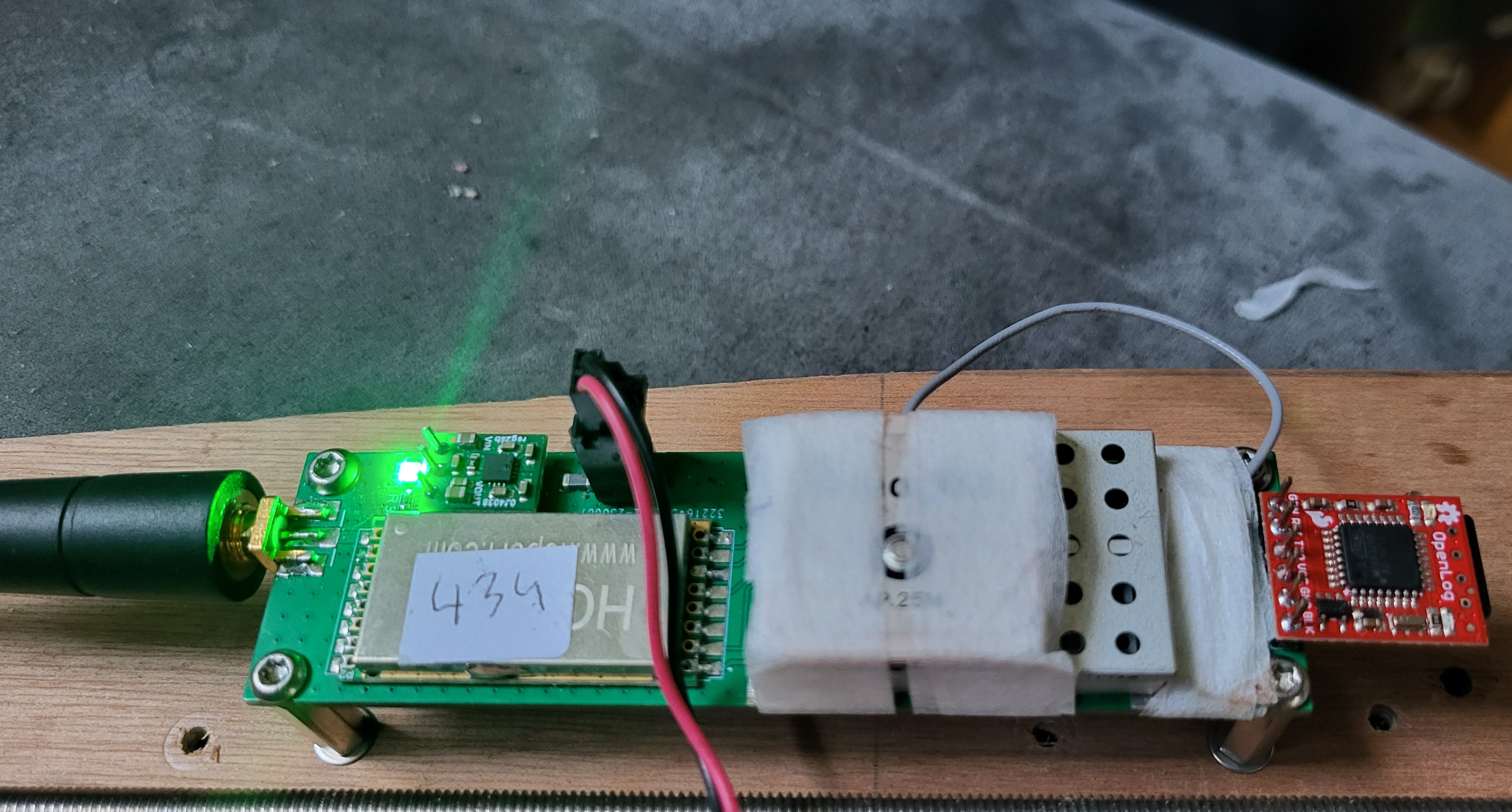
After some last-minute doubts about shock cords, we decided that the Intimidator rocket was good to go. It was the nineth time we launched this rocket in a period of 10 years, so it was a bit of an anniversary. Over these years, the Intimidator has been used for testing new concepts and electronics. Next to the new GPS tracking hardware, the rocket was now also equipped with a new APCP motor designed and built by JvdB.
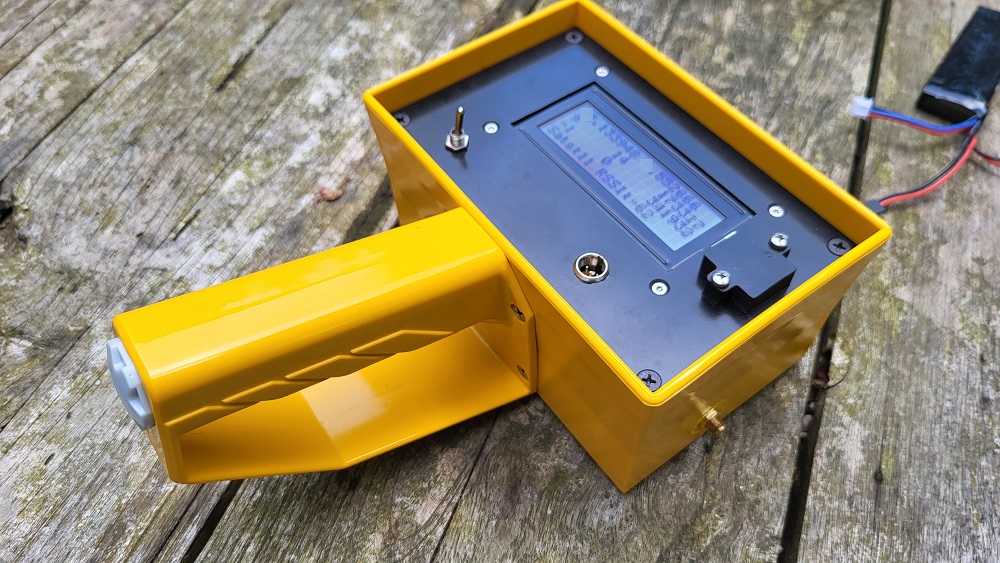
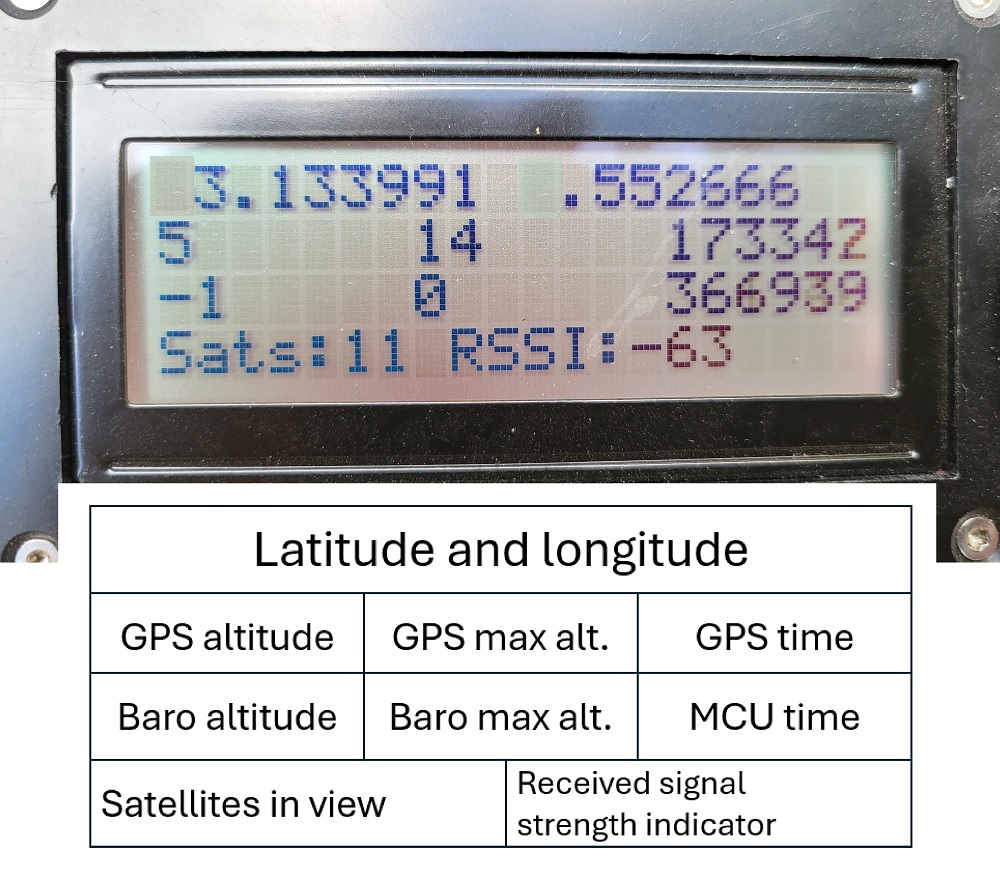
After arming the rocket, we quickly drove up to the viewing area to obtain a clear view of the launch area. This proved to be challenging as the student teams Aquilo and Rise were accompanied by many spectators. After finding a private spot, the handheld tracking receiver was activated which started sending GPS data to the Rocket Locator App on my phone. The LORA data transfer is relatively slow, and updates were received approximately every 5 seconds.
After a quick countdown, the APCP motor quickly started and propelled the rocket out of the tower with a mighty roar. The rocket strongly accelerated in a straight line and quickly disappeared into the clouds.
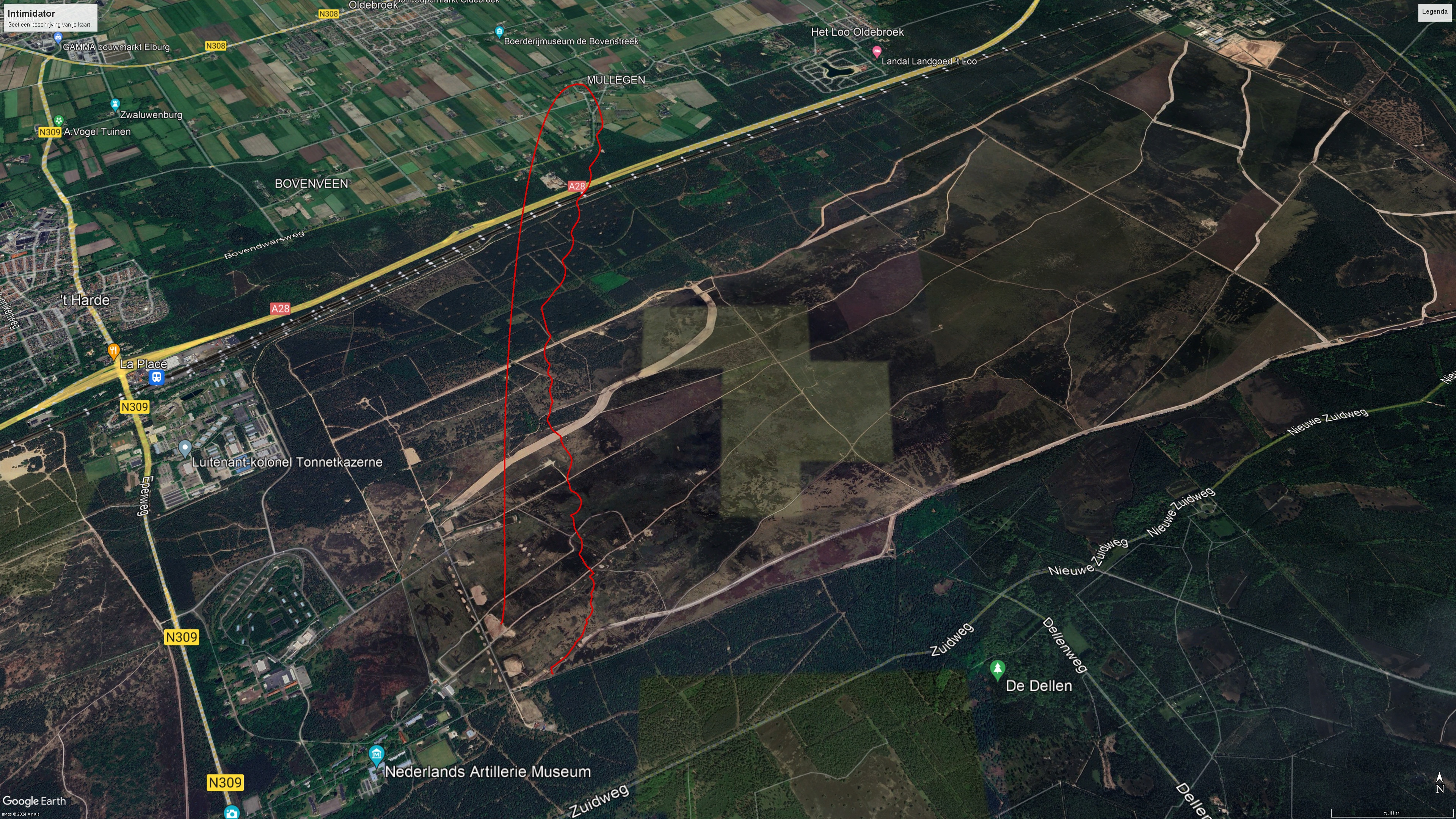
Rather than staring at the clouds, the rocket could now be tracked on the phone. Altitude was reported throughout the flight and the position was plotted onto a map of the area in the Rocket Locator App. Everything appeared to go as planned, and apogee was reached at 2619 meters. However, the descent velocity was much lower than the expected 30m/s of the drogue less design, indicating that the main had come out at apogee.
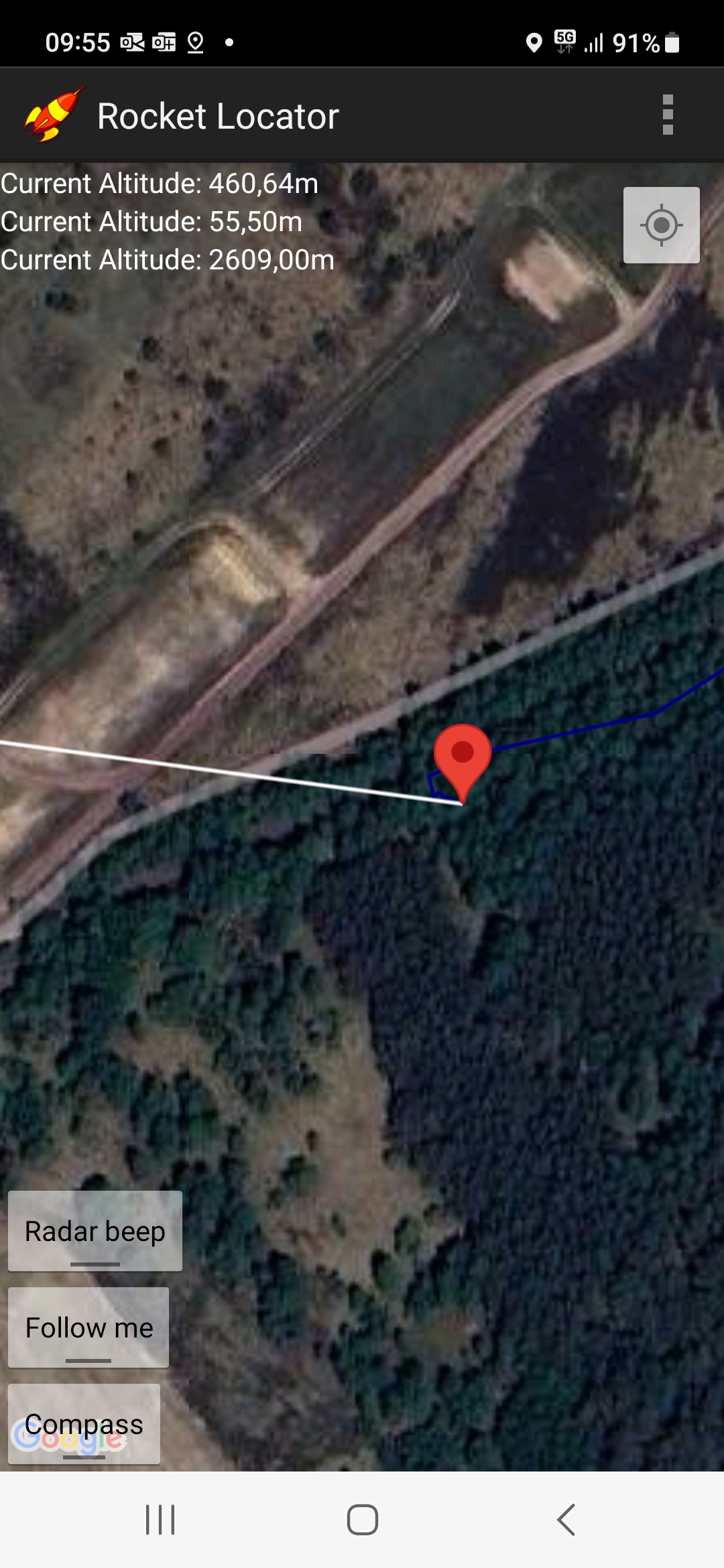
The trip down was slow and the winds at higher altitude threatened to push our rocket out of the desired landing area. Luckily winds were less strong and parallel to the field at lower altitudes. Finally, the rocket and parachute appeared from the clouds, exactly at the position indicated by Rocket Locator. However, it was clear that a landing in the trees was inevitable.
Recovery was easy as the parachute and rocket could be released from the trees with a gentle tug. Flight 9 was successful and the Intimidator is still in good shape for a 10th launch!